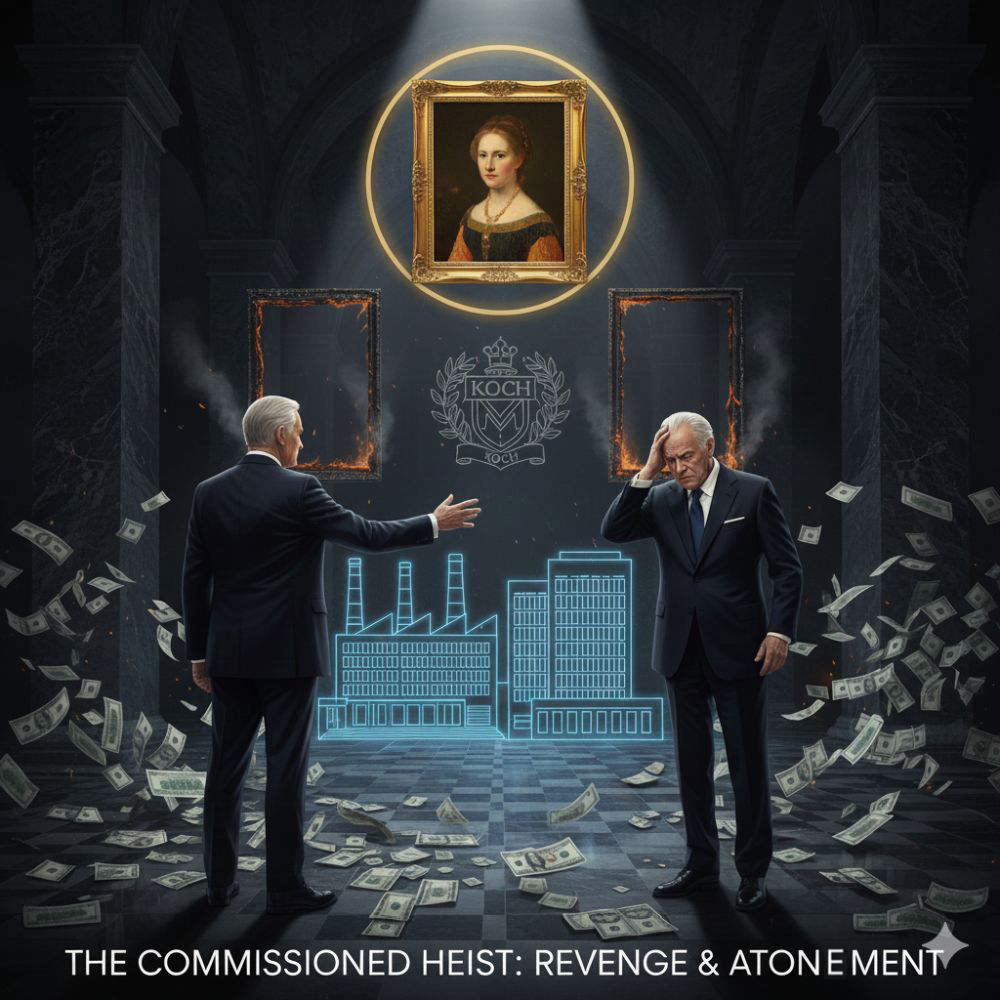
The specific provision about forfeiting the collection and endowment to Harvard University is the most famous and critical clause in her will.
Isabella Stewart Gardner’s Will (1924): The foundational document. The will established a trust and stipulated that the museum must be maintained “as I left it.” The will contained explicit directions:
No new acquisitions could be made.
The arrangement, titles, and contents of the rooms must not be changed (i.e., no moving, selling, or altering artwork).
The Forfeiture Clause: Crucially, the will included a clear penalty clause. If the trustees failed to comply with these terms—specifically, if the collection were moved or significantly altered—the property, art, and the operating endowment would be transferred to the President and Fellows of Harvard College to be sold, with the proceeds used to fund educational programs.
This is Suzanne Kenney, and you’re listening to the Crime and Canvas Podcast. In the past ten episodes, we’ve unraveled a truth that has been suppressed for over three decades. We’ve moved past the simplistic narrative of a mob job and proven that the solution to the 1990 Isabella Stewart Gardner Museum Art Heist lies not in the criminal underworld, but within the gilded, secretive world of America’s most powerful families.
We established the “checklist”—the astonishing numerical and artistic mirroring of the stolen art in the pieces Frederick R. Koch sold my mother, Mary, for mere dollars. We linked the physical evidence—the cut canvases—to Koch’s attempt to cover up a fire. We tracked his digital footprint from Monaco, and we exposed the systemic cover-up by institutions protecting him.
But the central question has always lingered: Why would a billionaire risk everything to sell millions of dollars of art to a flea market vendor?
Now, in Episode 11, we peel back the final, most personal layer of this conspiracy. We reveal the motive that ties the art, the money, the feud, and the guilt all together. Today, we solve The Commissioned Heist.
The answer lies in the public, brutal history of the Koch family—a history defined by immense wealth and devastating litigation. We know from public record that the Koch brothers fought one another viciously in the 1980s. Frederick and William sued Charles and David over their stakes in Koch Industries. This led to a massive, life-altering legal settlement where Charles and David bought out their brothers’ for a staggering total of $1.1 billion.
This financial bitterness was amplified by a deeply personal betrayal: Frederick and William forced their ailing mother, Mary Koch, to testify in court shortly after she suffered a stroke. Mary was so disgusted by the conflict that she disinherited both Frederick and William.
This act of betrayal—putting the family feud above his mother’s health, leading to her disinheritance of him—is the wellspring of Frederick’s profound guilt.
This episode comes from a recent development of information, specifically the terms of Isabella’s Will. This revealed that the entire collection and its endowment would be forfeited to Harvard if the Trust’s terms were broken.
Frederick was also distraught because the heist, if discovered, would mean the Museum would be destroyed. This is due to the Will’s stipulation that any breach would lead to the Trust transferring to Harvard, and as a result the collection would be broken up and sold, destroying Isabella’s artistic vision. Frederick feared this legal action. He had even discussed creating a museum with my mother, that he was creating with his mother. He also discussed a great dislike for his twin brother, which makes sense if he was pressured into doing a heist he now regretted.
My final theory is: David Koch commissioned the Isabella Stewart Gardner Museum Heist, and he asked his brother, Frederick, (who studied Drama at Yale) to execute it. This wasn’t just about a crime; it was a strategic move rooted in acquisition and institutional manipulation.
The motive is simple: David wanted to purchase the art he couldn’t buy. The only way to acquire the world-famous masterpieces was to steal them because Isabella’s will mandated the art could not be sold. Could not be sold, could not be moved. David figured his brothers owed him one for the past legal battles. Plus according to the media (from the 1980s and the 1990s) the Koch brothers already knew Frederick was a thief.
My theory David’s ultimate plan was to steal the art and then purchase the Museum’s silence through a massive, anonymous donation. This strategy was designed to ensure the Museum had a vested interest in remaining silent about the art’s fate.
If Frederick Koch stole the art for his brother rather than for himself, this dramatically intensified his subsequent guilt. He was the operator, performing a major felony that led to a death, all for his brother’s gain and within the shadow of his mother’s disinheritance.
William tucked Fred in Okeechobee because they were afraid the mafia was going to kill him next. After killing Bobby Donati.
The entire Checklist—the Van Gogh, the Picasso, the Manet sold to Mary along with the Jim Cassel print which was given to Mary—was Frederick’s means of emotional cleansing, a desperately needed “good deed” to offset the profound family crime he had committed.
The final proof of this cover-up strategy lies in the institutional reaction when the potential donation was challenged.
I directly confronted the museum with my Change.org petition, demanding transparency on any Koch family donations. The response was immediate and vile: the sexual harassment directed at me by “Heywood Jablomey,” confirming that I had hit a nerve. The museum’s immediate reaction to a demand for transparency about donations, rather than a denial of the art theft, strongly suggests that the donation is the cover-up.
The truth is no longer a collection of fragments; it is a unified narrative of power, crime, and the astonishing bravery of one woman—my mother, Mary—whose simple flea market story holds the key to the largest art heist in history. And if Harvard University files to take the Isabella Stewart Gardner Museum. It will be the largest art forfeiture in history.
I want to recap a billionaire stole the artwork because he couldn’t buy it. NO mafia folks.
I urge you to take action. Email info@propublica.org to demand coverage of my 15-year fight for justice. Tell them you’ve heard the evidence on the Crime and Canvas Podcast. Use #CrimeAndCanvasPodcast when you share this episode.
And remember, if you’re going through a similar struggle, if you have a voice that needs to be heard, visit uhv.news. I started uhv.news because every voice matters. It’s a place I started for others going through similar struggles or taking time to praise someone in their community.
Thank you for joining me on the Crime and Canvas Podcast. This is Suzanne Kenney. I’m grateful for your time and your willingness to hear this story. Let’s always remember, the truth is still the truth, even if no one believes it.